





Interior Cladding
Internal wall cladding and panels in Melbourne
Greenhill Timbers stocks internal wall cladding at our yard at 170 Settlement Road, Thomastown, with pickup or delivery across Melbourne and regional Victoria: primed MDF panels ready to paint, thermally modified aspen boards, and solid and veneered Australian timber for feature walls and ceilings. Internal cladding is any board or panel fixed over a wall or ceiling to change its surface, and the profile you pick, the width of the groove and the depth of the shadow line, does more for the room than the material.
-
American Oak Veneer Half Round
$125.00 /m² -
Easy Regency Interior
From $36.21 /each -
Easy Regency Wet Area
From $135.00 /each -
EasyCraft Vj Interior
From $86.39 /each -
EasyCraft Vj Wet Area
From $120.49 /each -
Silhouette Convex
From $86.59 /each -
Tasmanian Touchwood Oak
From $230.00 /each -
Thermory Aspen KYTE-S Wall Panel
From $22.95 /each

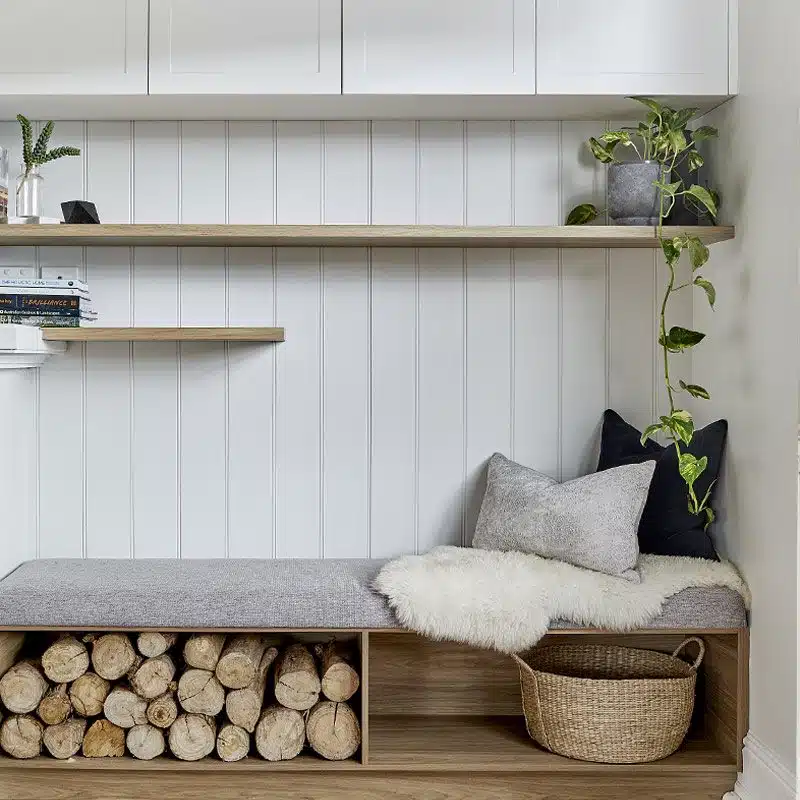
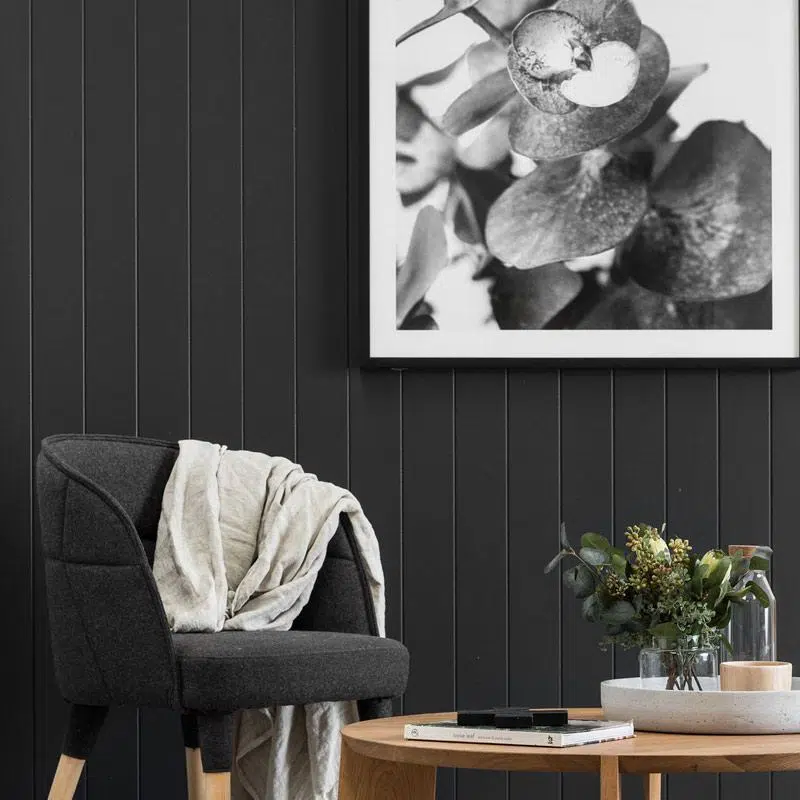

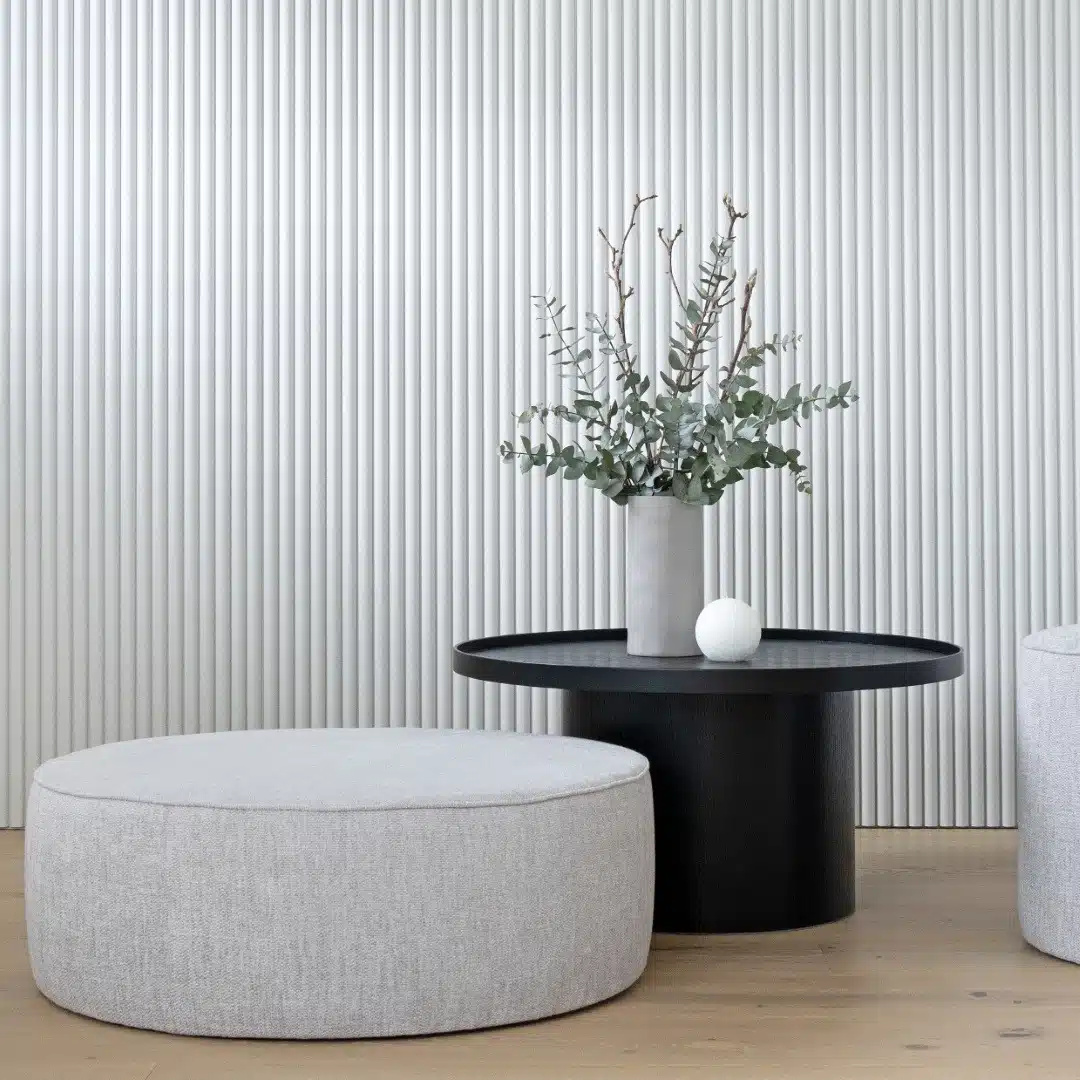

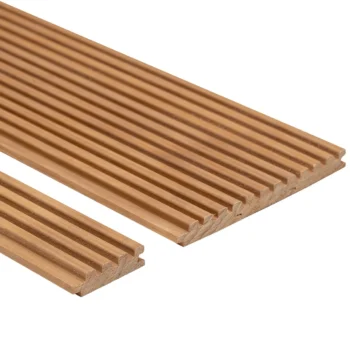
Painted wall panels: EasyCraft and Silhouette
EasyCraft easyVJ is the classic V-joint lining board look in a primed MDF sheet, in VJ100, VJ150 and VJ300 groove spacings and sheets from 2400 to 4500 mm, from $86.39 a sheet. easyREGENCY has the wider 150 mm traditional profile, from $36.21. Both come in a wet area grade in moisture resistant MDF for bathrooms and laundries, from $120.49. EasyCraft rates the panels at 300% tougher than plasterboard, and the hidden tongue-and-groove joint means no visible fixings. Silhouette Convex gives a curved, ribbed surface in 18, 35 and 45 mm spacings for walls and ceilings, from $86.59.
Timber panels: Thermory aspen
Thermory wall panels are thermally modified aspen, a golden-brown board that stays stable in humidity and comfortable to touch when warm, which is why the Step profile is used for sauna walls. The KYTE-S, Vire, Step and SRP profiles come in 2.7 and 3.0 m boards from $22.95.
Solid and veneered timber
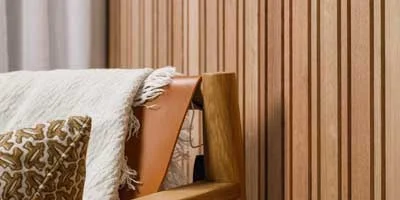
Tasmanian Oak cladding is a fine-grained pale hardwood in V-joint, slim line and shiplap profiles from 82 to 137 mm wide, 12 mm thick, from $10. Touchwood Tasmanian Oak veneer panels give the same timber in a 100 mm VJ sheet with natural or black tongues, in 2400 to 3600 mm sheets, $230 to $411. American Oak half-round veneer panels are a 12 mm ribbed panel on a flexible backing that bends around curved walls and columns, $125 a panel.
Choosing a profile for a feature wall
Narrow spacings read as texture from across a room; wide spacings read as individual panels. Painted MDF gives the crispest lines and the easiest colour match; timber brings grain and warmth and suits oil or clear finishes. In a wet area use the moisture resistant grade, which is the same profile in a substrate that will not swell. For a ceiling, the lighter Thermory boards and the EasyCraft sheets are easiest to lift.
Installing internal cladding
Sheets fix over new studs or straight over an existing plaster wall with construction adhesive and a few concealed fixings, then get gap-filled and painted. Timber boards go on over battens or direct to studs, secret-nailed through the tongue. Leave a small expansion gap at floor and ceiling and cover it with skirting and cornice or a shadow-line bead. For outside walls, see our external cladding.
Bring the wall size in, or call (03) 9465 9875, and we will work out the sheet or board count.
Internal cladding panels and prices
Prices as at 19 October 2026, including GST, for pickup from 170 Settlement Road, Thomastown; delivery across Melbourne and regional Victoria is quoted on the order. Stock and prices change, so the product page has the current figure.
American Oak Veneer Half Round: $125 per m².
Easy Regency Interior: 1200×900 $36.21; 2400×1200 $96.62; 3000×1200 $120.76; 3600×1200 $144.93; 4500×1200 $221.52 per sheet.
Easy Regency Wet Area: 2400×1200 $135; 3000×1200 $163.45; 3600×1200 $202.54 per sheet.
EasyCraft Vj Interior: 2400 VJ100 $86.39; 2400 VJ150 $100.52; 3000 VJ100 $107.97; 3000 VJ150 $123.59; 3600 VJ100 $129.59; 3600 VJ150 $151.01; 4500 VJ100 $221.49; 4500 VJ150 $230.80 per sheet.
EasyCraft Vj Wet Area: 2400 VJ100 $120.49; 2400 VJ150 $135; 3000 VJ100 $150.63; 3000 VJ150 $168.79; 3600 VJ100 $180.78; 3600 VJ150 $202.54 per sheet.
Silhouette Convex: 45 900×1200 $86.59; 18 900×1200 $86.59; 35 900×1200 $111.28; 45 1200×1200 $192.46; 18 1200×1200 $192.46; 35 1200×1200 $221.56; 45 2400×1200 $230.93; 18 2400×1200 $230.93; and more sizes per sheet.
Tasmanian Touchwood Oak: Natural 2400 $230; Natural 2700 $259; Natural 3000 $288; Black 2400 $329; Natural 3600 $384; Black 3000 $411 per sheet.
Thermory Aspen KYTE-S Wall Panel: 2.7m $22.95; 3.0m $25.50 per sheet.
Thermory Aspen SRP Wall Panel: 2.7m $35; 3.0m $39 per sheet.
Thermory Aspen Step Wall Panel: 2.7m $32.50; 3.0m $36.10 per sheet.
Thermory Aspen Vire Wall Panel: 2.7m $22.95; 3.0m $25.50 per sheet.
Tasmanian Oak Cladding: Shiplap 86×12 $10; V-Joint 86×12 $10; Shiplap 112×12 $12.50; V-Joint 112×12 $12.50; Shiplap 133×12 $20.06; V-Joint 137X12 $20.06 per lineal metre.
Related ranges
Related: timber battens for ceilings and walls, wood panels, skirting and architraves, external cladding. Brands: EasyCraft, Thermory.
Questions we get asked about internal wall cladding
What is internal wall cladding?
Any board or panel fixed over an internal wall or ceiling to change its surface: primed MDF panels such as VJ and Regency, timber lining boards, thermally modified aspen boards, or veneer panels.
Can I use VJ panels in a bathroom?
Yes, in the wet area grade, which is moisture resistant MDF. Seal every cut edge and paint the panel fully, including behind fittings.
Do I need to remove the plaster first?
No. Panels fix over sound plaster with construction adhesive and a few concealed fixings into the studs. Only remove plaster that is loose or damp.
How are the panels finished?
EasyCraft and Silhouette panels come primed and take two top coats of standard wall paint. Timber and veneer boards take an oil or a clear finish.