



Timber grades explained: Select, Standard & Better, Feature, MGP10, F7 and H3
Every length of timber we sell carries a grade, and the grade is usually the reason two boards of the same species and size have different prices. There are three separate grading systems and they measure different things: how a board looks, how much load it carries, and how well it has been treated against rot and insects. This page explains each in plain terms, with the grades you will see on our shelves at 170 Settlement Road, Thomastown.
1. Appearance grades: how the board looks
Appearance grades apply to timber you will see: flooring, decking, cladding, screening battens and dressed boards. They do not measure strength. They count the natural features in the face of the board, such as gum veins, knots, insect marks, colour variation and sapwood, and sort the boards by how many are allowed.
Hardwood flooring (AS 2796)
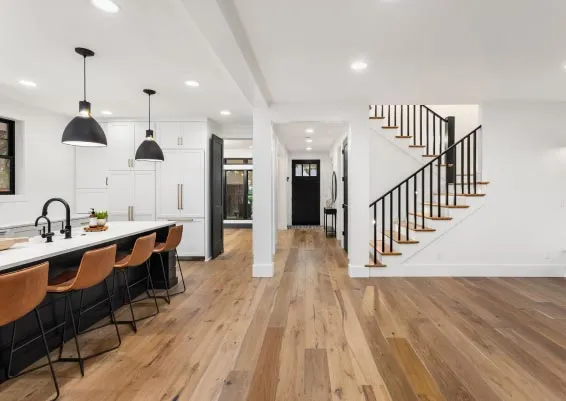
- Select: the cleanest face, with only small, occasional features. The most uniform look and the highest price.
- Standard (also called Medium Feature or Classic): some gum veins, small knots and colour variation. The grade most people mean when they picture an Australian hardwood floor.
- Feature (also called High Feature or Rustic): plenty of gum vein, knots and colour, chosen for character. Not a lower-quality board, just a busier one, and usually the cheapest.
The same system runs through our solid timber flooring. A Select Blackbutt floor and a Feature Blackbutt floor are the same timber, kiln-dried and machined the same way; the difference is only what you see on the surface.
Decking and dressed boards
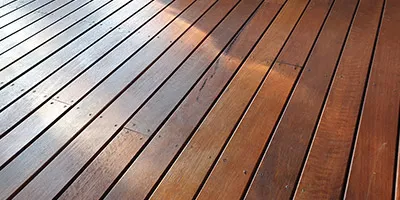
- Standard and Better (S&B): the usual decking grade. Boards are mostly clean, with some feature allowed. Our Merbau decking is Standard and Better, kiln-dried.
- Select: a cleaner face, usually only by order.
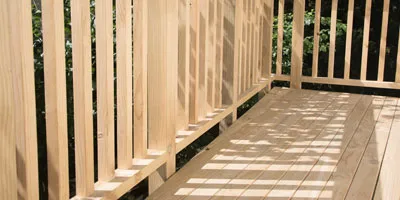
- Utility or Feature: more knots, gum vein and wane, sold cheaper for fences, screens and hidden framing rather than show decks.
Decking is also graded on the reverse. A “reeded” or “ribbed” back is the standard profile on Merbau and lets air move under the board; it is not a defect and it is laid reeded side down.
Dressed, DAR and rough sawn
These are finishes, not grades, but they come up on the same price tags. DAR means dressed all round, so all four faces are machined smooth to a finished size: a 90 × 19 DAR board measures 90 × 19 mm. Rough sawn timber is straight off the saw at its nominal size, so a rough sawn 100 × 100 post is bigger and rougher than a dressed one, and it is the usual choice for fence posts and stumps. Our dressed Merbau and posts pages show both.
2. Structural grades: how much load it carries
Structural grades apply to framing, joists, bearers, posts and beams, where the look does not matter and the strength does. They come in two families.
MGP grades for pine framing
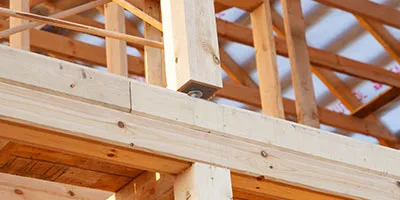
MGP10 and MGP12 are machine-graded pine grades (AS/NZS 1748). Each piece has been stiffness-tested by machine and stamped. MGP10 is the standard grade for house framing in Australia and the one in our framing pine and treated pine ranges; MGP12 is stiffer and lets you span a little further in the same size. The number is not a span; the spans come from the framing tables in AS 1684, which your builder or engineer works from.
F grades for hardwood and some pine
F7, F8, F11, F14, F17 and up are the older stress grades (AS 1720). The number is roughly the bending stress in megapascals the grade is allowed. F7 is common for treated pine sold through hardware yards and is close to MGP10 in practice; F17 is the usual grade for structural hardwood such as kiln-dried Victorian ash and for hardwood joists and bearers. Our cypress posts are F7.
LVL
LVL beams are not graded this way at all. They are engineered from glued veneers to a manufacturer’s published strength, which is why a 140 × 45 LVL can span further than a 140 × 45 MGP10 of the same size. Use the supplier’s span tables.
3. Treatment hazard levels: what it can survive
Treatment classes (AS 1604) say what exposure a treated board is protected for. They are written H1 to H6 and the number goes up with the hazard.
- H2: inside, protected from the weather. Termite-protected framing.
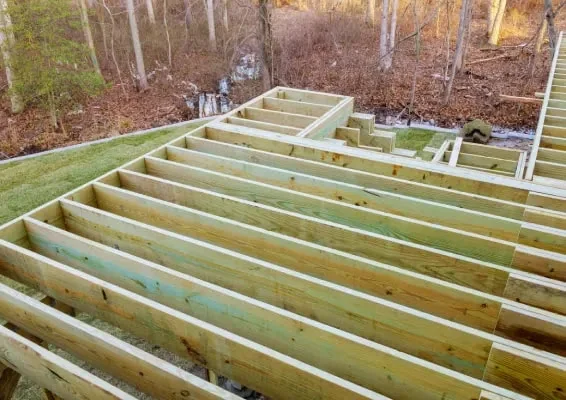
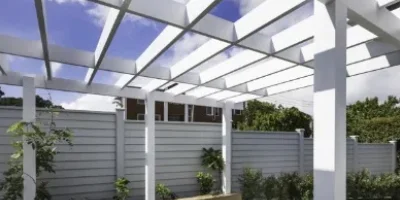
- H3: outside, above ground. Decking subframes, pergolas, cladding, fence rails. The grade of our H3 LOSP treated pine and LOSP primed pine.
- H4: outside, in the ground or in contact with the ground. Fence posts, retaining-wall sleepers, garden beds. Our H4 treated posts.
- H5: in the ground in severe conditions, wet or in fresh water. Piles and house stumps in wet ground.
- H6: in salt water.
The letters after the H number tell you the treatment chemical. LOSP (light organic solvent preservative) leaves the timber dry, paintable and its natural colour, which is why our LOSP primed pine is the choice for painted pergolas and fascias. CCA and ACQ are water-borne treatments that turn the timber green and are used for H4 posts and sleepers. CCA-treated timber is not used where it will be in regular contact with food or children’s play equipment, so for a vegetable bed ask us for an ACQ or non-CCA H4 option.
4. Two words that are not grades
Kiln-dried (KD) means the timber has been dried in a kiln to a stable moisture content before machining. Flooring, decking and dressed boards should always be kiln-dried; it is why they stay straight and tight after laying. Durability class (1 to 4) is the natural resistance of an untreated species to rot and termites, which we explain in our decking timber comparison. It is a property of the species, not something a grader assigns.
Reading a price tag
Put together, a tag reading “90 × 45 MGP10 H3 LOSP KD” is pine framing, machine-graded MGP10 for strength, treated H3 for outside above-ground use with a solvent preservative, kiln-dried, and dressed to 90 × 45 mm. “135 × 19 Spotted Gum S&B KD decking” is a Standard and Better appearance grade, kiln-dried, with no treatment because Spotted Gum does not need one. If a tag does not say, ask; the grade is on the pack and we are happy to show you.
Common questions
Is Feature grade lower quality than Select? No. It is the same timber with more natural character showing. It is cheaper because fewer people choose it, not because it performs worse.
Can I use H3 timber as a fence post? Not in the ground. Posts in the ground need H4. H3 is fine for the rails.
Is MGP10 the same as F7? Close in practice, but they are graded differently and the span tables are separate. Follow the table for the grade stamped on the timber.
Do you sell Select-grade decking? Our Merbau decking is Standard and Better; ask us about the grade on the other species. Select can be ordered; call (03) 9465 9875.
Standards referred to: AS 2796 (hardwood flooring), AS/NZS 1748 (machine-graded pine), AS 1720 and AS 1684 (timber structures and framing), AS 1604 (preservative treatment).