





Merbau vs Spotted Gum Decking: A Complete Comparison Guide for Australian Homeowners
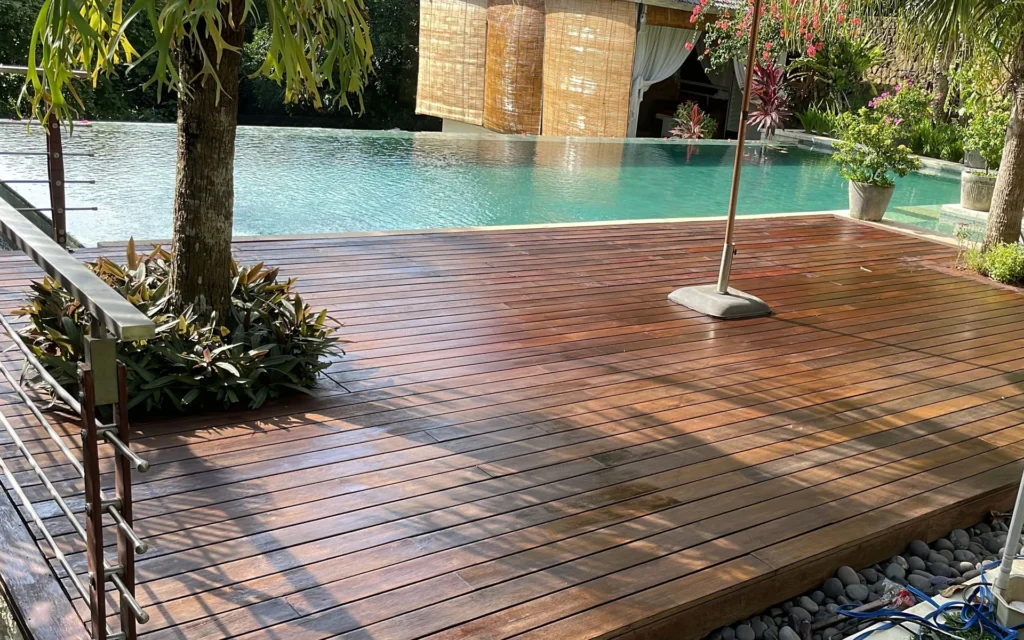
When it comes to choosing the best timber decking for Australian homes, two names come up time and time again: merbau and spotted gum. Both are hardwood heavyweights with a long track record in Australian outdoor spaces, and both will give you a deck that looks genuinely beautiful underfoot. But they’re not the same timber, and the differences between them matter when you’re making a decision that will last for decades.
To help you choose with confidence, we’ve put both timbers head-to-head in terms of appearance, durability, maintenance, sustainability, and price so that you can find the right fit for your home.
A Side-By-Side Comparison
Before we get into the intricacies of the pros and cons of merbau and spotted gum, here’s a quick overview of how they each stack up across the categories that matter most:
| Merbau Decking | Spotted Gum Decking | |
|---|---|---|
| Origin | Southeast Asia (PNG, Indonesia) | Native Australian hardwood |
| Colour | Rich reddish-brown, ages to silver-grey | Light brown to deep chocolate, variable grain |
| Janka Hardness | 8.5 kN | 11 kN |
| Durability Class | Class 2 | Class 1 |
| Lifespan | 25–30 years | 20–25 years |
| Maintenance | Oil every 12 months, manage tannin bleed | Oil every 12 months, retains colour well |
| Sustainability | FSC certification available | Australian-sourced, strong supply chain |
| Price | Mid-range | Mid-to-high range |
Meet the Timbers
Introducing merbau, the reliable workhorse, and spotted gum, the Native Star.
Merbau
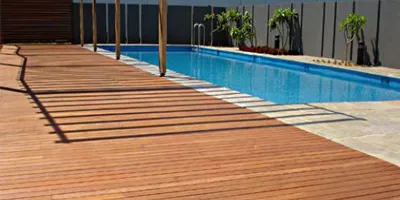
Sourced primarily from Papua New Guinea and Indonesia, merbau is a dense, stable hardwood with a rich reddish-brown to deep chocolate colour that brings an immediate warmth to any outdoor space. It has a relatively straight, interlocked grain and a naturally oily composition that contributes to its durability and resistance to the elements.
One thing to be aware of is merbau’s natural tannin content, which can cause a reddish bleed when the timber first gets wet. This typically settles after a season or two and is manageable with proper finishing, but it’s worth knowing upfront, especially if you have light-coloured paving or pool surrounds nearby.
Spotted Gum
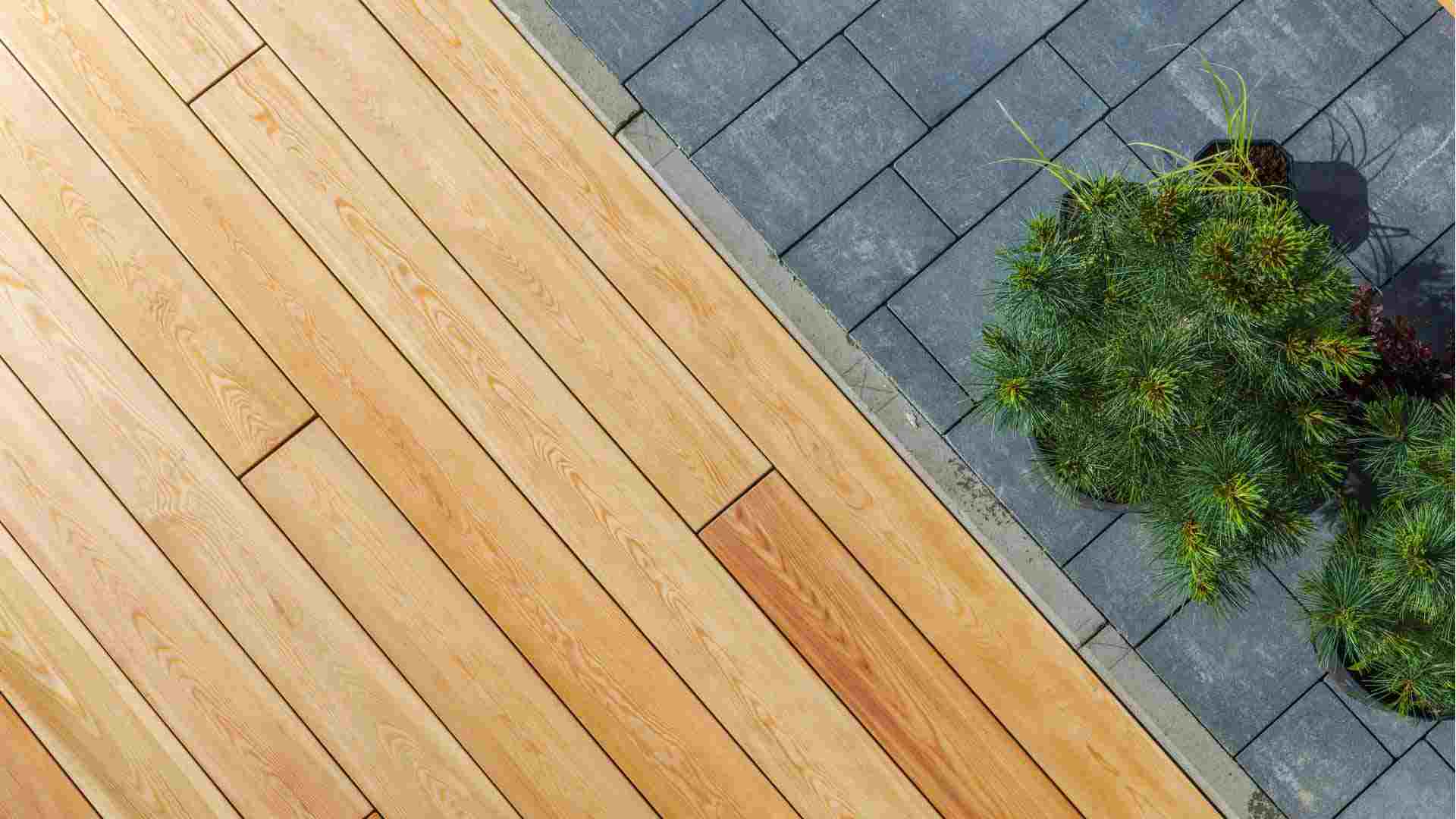
Spotted gum decking is a native Australian hardwood grown primarily along the NSW and Queensland coastlines, and it’s widely regarded as one of the most beautiful timbers available for outdoor use. Its defining feature is its stunning, variable grain, wavy, interlocked patterns that shift between light brown, honey, and deep chocolate tones, sometimes all within the same board. No two spotted gum decks look exactly alike, which is part of its enduring appeal.
Beyond aesthetics, spotted gum is also one of the hardest and most durable timbers available in Australia, with a Class 1 durability rating and natural resistance to termites, rot, and fire.
Appearance & Design Style
When it comes to looks, this one really comes down to personal taste.
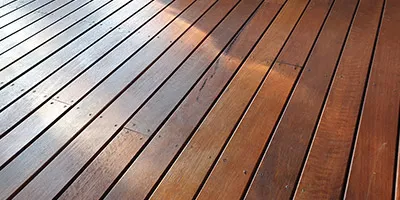
Merbau decking delivers a consistent, rich warmth. Its reddish-brown tones and relatively uniform appearance make it a reliable choice for homeowners who want a classic, polished finish that complements a wide range of home styles, from Federation cottages to contemporary builds.
Spotted gum decking benefits lean heavily on character. The wavy grain and tonal variation give it a more organic, expressive look that suits homes with a natural aesthetic or architectural designs that celebrate texture and movement. It also holds its colour particularly well over time when maintained properly, unlike some timbers that grey off quickly.
Durability and Lifespan
Melbourne’s climate is notoriously variable, with hot, dry summers, cold, wet winters, and everything in between. Both timbers handle these conditions well, but there are some differences worth noting.
Spotted gum decking has a Janka hardness rating of around 11 kN, making it one of the hardest decking timbers available. It holds up well under heavy foot traffic, resists denting and surface wear, and performs reliably through Melbourne’s seasonal temperature swings. Its Class 1 durability rating also means it offers the highest natural resistance to decay and insect attack. With proper maintenance, a spotted gum deck can last upwards of 25 to 30 years.
Merbau decking ranks around 8.5 kN on the Janka scale, still very hard by any measure and more than sufficient for residential decking. Its natural oil content gives it good dimensional stability, meaning it’s less prone to warping or cupping as temperatures fluctuate. It carries a Class 2 durability rating, which is still excellent for outdoor use. With that in mind, a well-maintained merbau deck can be expected to last between 20 and 25 years.
Maintenance
Merbau decking maintenance is fairly straightforward. Like all hardwood decking, merbau benefits from an oil applied every 12 months to keep the timber hydrated, protected, and looking its best. In the early months, you’ll want to monitor tannin bleed after rain and wash it down promptly to avoid staining surrounding surfaces. A penetrating hardwood oil in a warm amber tone will help maintain merbau’s signature reddish-brown colour, though some homeowners choose to let it age gracefully to a silver-grey.
Spotted gum decking maintenance follows a similar routine: a thorough clean and re-oil annually, with more frequent attention in the first year as the timber acclimatises. Spotted gum is known for holding its colour well between maintenance cycles, which means the deck stays looking sharp even if you push the oiling schedule out slightly. Because it doesn’t have the same tannin bleed as merbau, it’s also a lower-stress option around pool coping or light concrete.
Sustainability & Responsible Sourcing
Spotted gum is a native Australian species with a well-established local supply chain. Australian hardwood forestry is subject to strict environmental regulations, and when sourced from certified forests, spotted gum represents a genuinely renewable, responsibly managed material. At Greenhill Timbers, we stock spotted gum sourced from certified suppliers committed to sustainable forestry practices.
Merbau requires a closer look. Historically, some merbau has come from illegally logged sources in Southeast Asia. However, FSC-certified (Forest Stewardship Council) merbau is now widely available, and when sourced responsibly, it’s a legitimate and sustainable choice. When purchasing merbau, always ask your supplier for FSC certification or verified chain-of-custody documentation.
Price & Budget Considerations
Merbau decking is generally the more budget-friendly of the two, making it a popular first choice for homeowners watching the bottom line without compromising on quality or appearance. Its wide availability and consistent supply keep prices competitive, making it one of the best decking timbers in Australia for those balancing cost with performance.
Spotted gum decking typically sits at a higher price point, reflecting its native status, exceptional hardness, and strong demand among architects and builders. For homeowners who are committed to the look and performance of spotted gum, the premium is generally considered well worth it, particularly given its Class 1 durability and longevity.
As a rough guide, the price difference between the two can vary depending on board profile, grade, and availability at the time of purchase. It’s always worth getting a current quote rather than relying on general estimates.
Partner With Greenhill Timbers
At Greenhill Timbers, we’ve been supplying quality hardwood decking to Melbourne homeowners, builders, and landscapers for over 20 years. Whether you’re drawn to the rich warmth of merbau decking or the natural character of spotted gum decking, our team can help you choose the right timber, grade, and board profile for your project.
We stock both timbers across a range of sizes and can provide expert advice on oiling, maintenance, and installation to help your deck perform beautifully for years to come.