




How to Choose the Right Decking Material for Melbourne’s Climate

Choosing the perfect decking material for Melbourne’s climate involves balancing durability with the four-seasons-in-a-day phenomenon.
Fortunately, with this article in hand, you’ll have everything you need to know to navigate the complexities of decking material selection and ensure your outdoor space is built to last. Let’s dive in.
Understanding Melbourne’s Weather
Melbourne’s weather is best described as “temperate oceanic,” which is a fancy way of saying it’s generally mild but incredibly moody. This means that while the city generally mirrors the rest of Australia in experiencing intense heat in the summer months and staying relatively cool in the winter, the defining characteristic is its constant state of flux.
But what exactly causes this tug-of-war between hot and cold and sun and rain, and why is this coastal city so uniquely volatile? Well, this meteorological chaos stems from its geographical location, being between the hot, arid Australian interior and the cool Southern Ocean.
As weather systems move east, northerly winds that carry desert heat are often abruptly replaced by Antarctic cold fronts, known as “southerly busters,” which can drop temperatures by 10 degrees in minutes. This volatility, intensified by the Great Dividing Range and Port Phillip Bay, triggers sudden shifts from sun to rain, frequently rendering the morning forecast obsolete by noon.
Understanding Timber Decking in Melbourne Weather Conditions
Here is how timber decking performs against our local environmental factors:
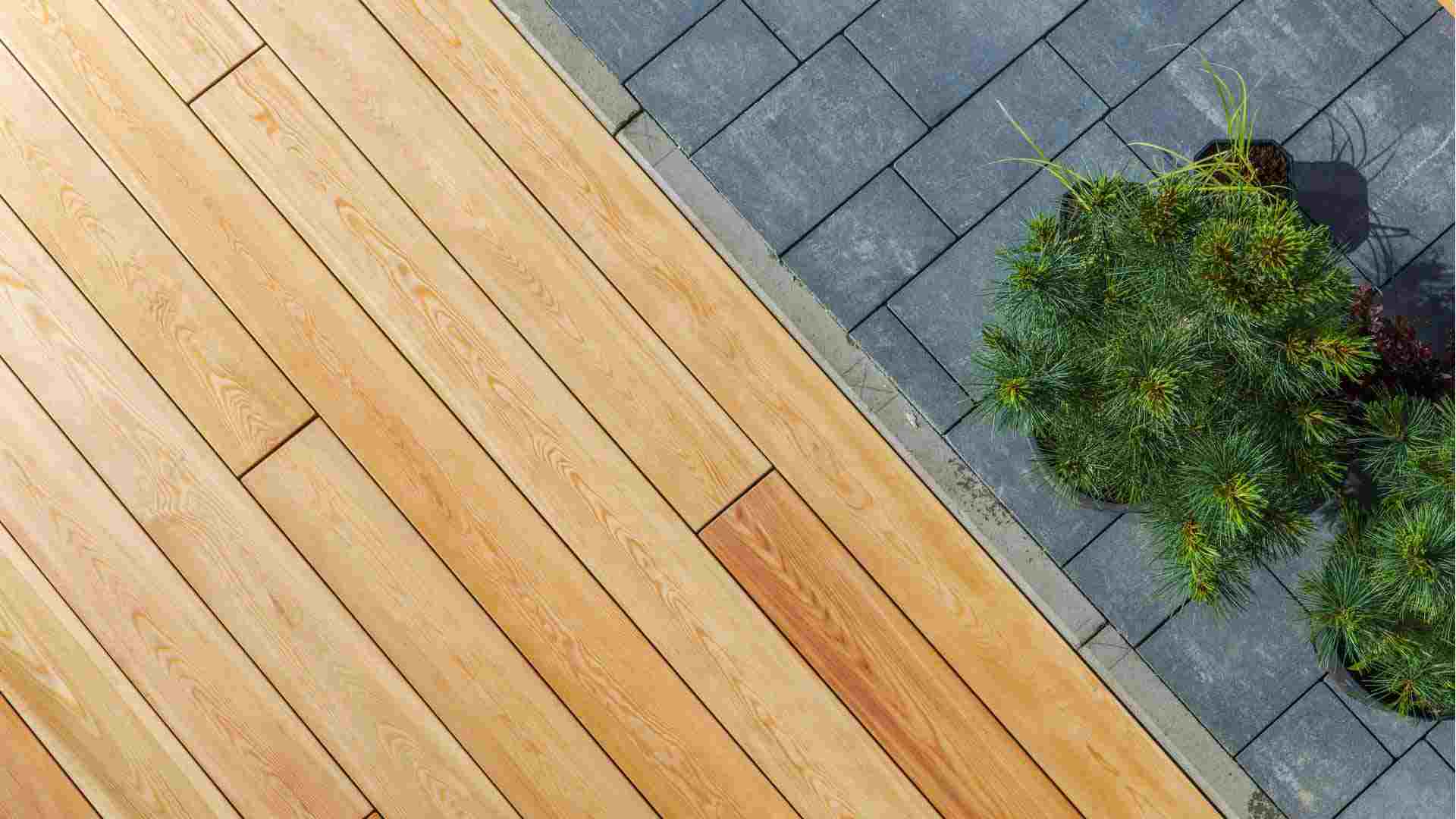
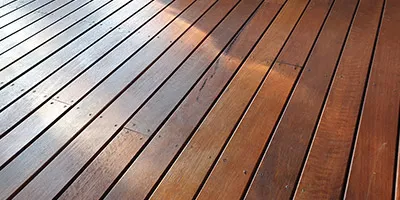
- Sun Exposure & UV Radiation: Melbourne’s summer sun is harsh. Without regular oiling, timber will lose its natural oils and turn a silvery-grey. Species like Merbau, Spotted Gum, and Blackbutt are popular in Victoria because their density resists the “drying out” effect better than softwoods.
- Temperature Fluctuations: The rapid temperature shifts in Melbourne cause timber to swell (when wet/humid) and shrink (under heat). Over time, this movement may lead to cupping (boards curving upward) or splitting.
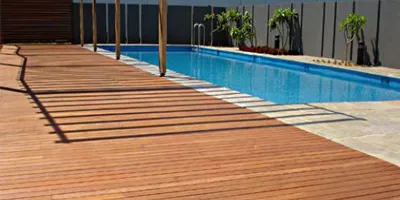
- Thermal Performance: Timber is the winner for comfort. It stays significantly cooler underfoot than most composite boards, making it the better choice for north-facing decks or pool areas where people walk barefoot in January.
What This Means for Maintaining Your Timber Deck
To stay on top of timber decking maintenance and ensure longevity in Melbourne’s climate, you have to treat it like a living material. Why? Because natural wood reacts physically to the city’s rapid shifts in humidity and intense UV levels.
To prevent the boards from cupping, splitting, or turning a dull charcoal grey, homeowners should commit to a regular maintenance plan of cleaning, sanding, and oiling every 6-12 months. While this may sound like a lot, it is often considered a small price to pay for the natural beauty, longevity, and superior cooling properties that only genuine hardwood can offer.
Understanding Composite Decking in Melbourne Weather Conditions
Here is how composite decking performs against our local environmental factors:
- Sun Exposure & UV Radiation: Higher-end capped composites exhibit high colour stability under UV exposure. However, their response to heat is different: they retain more thermal energy and can become quite hot underfoot during a Melbourne heatwave unless they are in a shaded area.
- Dimensional Stability: Composite boards do not warp, splinter, or twist. They handle the “four seasons in one day” by remaining physically stable, meaning your gaps stay uniform and your screws won’t “pop” due to wood movement.
- Moisture Resistance: During Melbourne’s long, damp winters, timber can rot or grow mould if not perfectly sealed. Composite is virtually moisture-proof; it won’t rot, and high-quality “capped” boards are highly resistant to the mould and mildew that thrive in shaded Victorian backyards.
What This Means for Maintaining Your Composite Deck
If you’re looking for weather-resistant decking for your Melbourne property, composite is the way to go, offering a “shielded” experience that bypasses the traditional chores of outdoor maintenance. Engineered with a protective polymer cap, these boards are essentially immune to the rot and mould that can plague timber during Melbourne’s damp, overcast winters.
You trade the scent and texture of real wood for a low-maintenance surface that never needs staining, won’t splinter, and really only ever requires a semi-regular clean with soap and water.
Choosing Decking for Coastal and Inland Melbourne
In coastal suburbs like St Kilda or Mornington, the air is thick with salt spray and higher humidity. Here, the challenge isn’t just the sun; it’s corrosion and moisture. Salt can act like an abrasive on timber finishes and eat through standard metal fixings. For these homes, Spotted Gum and Merbau are standout choices due to their natural density and lower tannin bleed, while Composite decking is a “set-and-forget” favourite because it is entirely impervious to salt-induced rot.
Conversely, inland residents face a different battle: intense, dry heat and higher UV exposure without the relief of a sea breeze. In these areas, timber is prone to drying out rapidly, leading to splintering and cupping if not maintained. Choosing a rugged, Class 1 durable timber like Merbau or Ironbark helps combat this drying cycle. At the same time, high-quality capped composite offers the thermal stability needed to prevent your boards from warping.
The Importance of Informed Decking Decisions
When selecting decking materials for Australia’s volatile hot-and-cold weather, being informed is your superpower. So while your personal opinions and aesthetic preferences are a great starting point, remember always to be understanding of the climate around you and how its nature interacts with different decking materials, for doing so allows you to make an informed decision, ensuring your outdoor space remains a safe, beautiful, and durable sanctuary for years to come.
All in all, if you’re looking for what the best decking is for Melbourne’s weather conditions, the ultimate answer will depend on numerous factors, including what kind of project you’re working on as well as your personal preferences, alongside a range of other factors, such as those listed in our blog; Timber vs Composite Decking: A Complete Comparison of Costs, Maintenance, Longevity, & More.
If you have any questions or would like to enquire with Greenhill Timbers today, please don’t hesitate to contact us, and a member of our team will be more than happy to help you!